
Cyperus rotundus oil before and after: what to expect week by week
What changes in week 1, week 4 and week 8, a real 8 week customer result, and how to track your own progress with photos.
Most people notice softer, smoother skin in the first week of using cyperus rotundus oil. The bigger changes in how skin looks between shaves usually show up between weeks 4 and 8 of twice daily use. Results build with consistency, so the honest before and after is an 8 week comparison, not a 3 day one.
A real cyperus rotundus oil before and after
This customer applied nellaskin Bare Oil twice a day after shaving her legs. The left photo is her starting point. The right is the same area after 8 weeks. The red, bumpy texture that comes with shaving every other day is gone, and her skin looks smoother and more even.
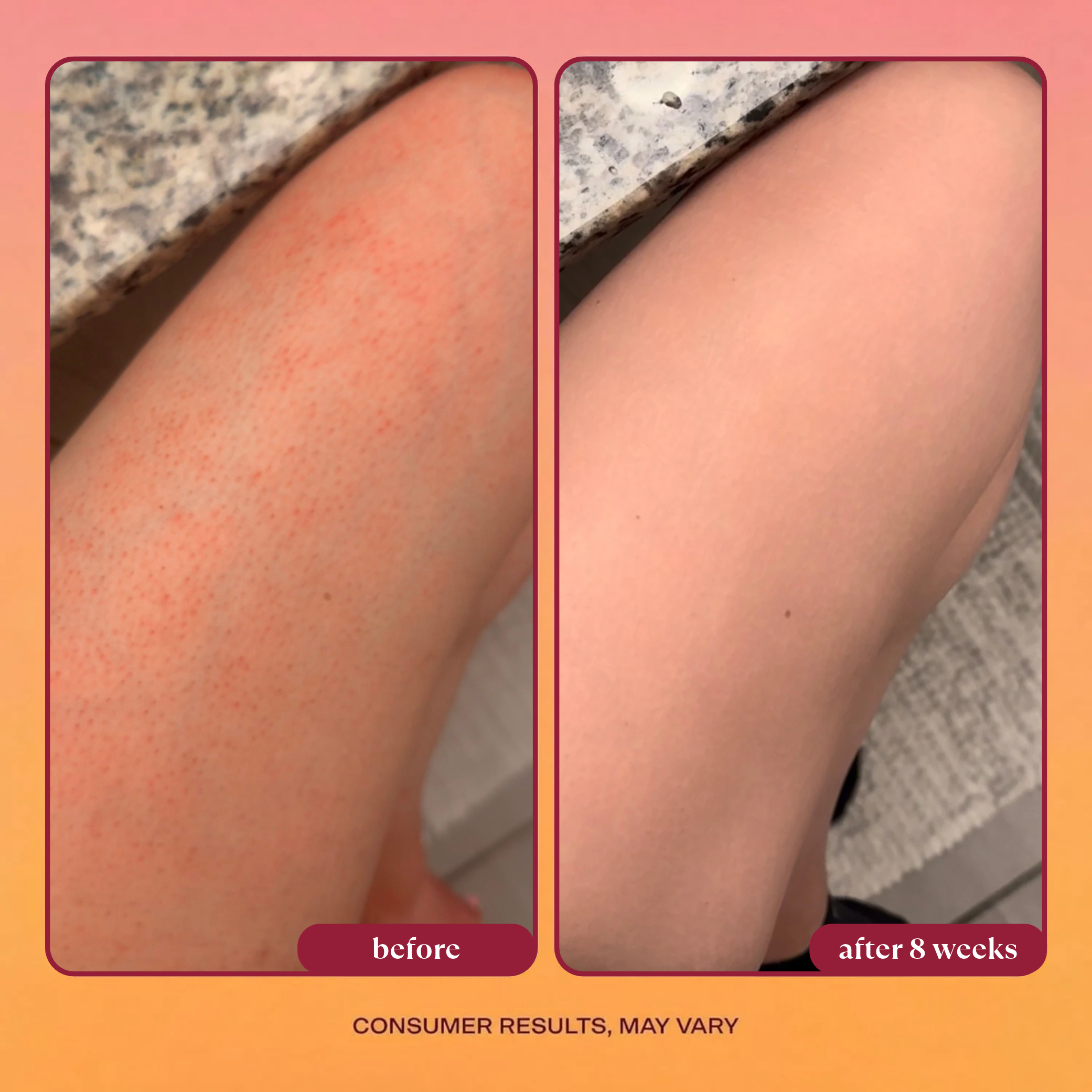
Cyperus rotundus oil results, week by week
Week 1Softer, calmer skin
The first thing you notice is how skin feels. The oil absorbs fast, and post-shave redness and tightness calm down. Nothing dramatic happens to hair yet, and that is normal.
Weeks 2 to 3Fewer bumps, less irritation
With daily use after hair removal, skin tends to look less bumpy and red. Many people start noticing they can go a little longer before stubble feels rough.
Weeks 4 to 6Smoother for longer
This is when most people see a visible difference in how skin looks between shaves. Regrowth tends to look finer and less noticeable.
Week 8 and beyondYour new baseline
By week 8, the before and after is clear in photos. Keep using it daily to maintain the result.
Why the timeline? Hair grows in cycles that take weeks, not days. In the clinical studies on cyperus rotundus oil, results were measured over weeks of consistent application. For the full background, see our guide to cyperus rotundus oil.
How to take an honest before and after photo
- Same spot, same light. Stand in the same place with the same lighting every time. Daylight from a window works best.
- Same day of your routine. Take each photo the same number of days after shaving, for example on day 3 after a shave.
- Same angle and distance. Mark where you stand and hold the phone at the same height.
- Photo every 2 weeks. Day 0, week 2, week 4, week 6, week 8. Day to day changes are too small to see.
How to get the best results
- Apply right after shaving, waxing, sugaring or epilating, on clean dry skin.
- Use 3 to 5 drops per area and massage until absorbed.
- Apply twice a day, every day, including days you do not remove hair.
- Do not stop at week 2. Most of the visible change comes after week 4.
Why results vary from person to person
Hair thickness, the area you treat, hormones, and how consistently you apply all affect results. Areas with coarse, hormone-driven hair such as the chin or underarms can take longer. If unwanted hair appears suddenly or spreads quickly, talk to a doctor, since it can be linked to a medical condition.
Frequently asked questions
How long until I see cyperus rotundus oil results?
Most people notice softer skin in week 1 and a visible difference in how skin looks between shaves between weeks 4 and 8 of twice daily use.
Are cyperus rotundus oil before and after photos real?
The before and after on this page is from a real nellaskin customer after 8 weeks of Bare Oil. Results vary from person to person.
Do I still need to shave while using cyperus rotundus oil?
Yes. Cyperus rotundus oil does not remove hair. You keep your usual hair removal routine and apply the oil afterward.
What if I do not see results after 8 weeks?
Check that you are applying twice daily on clean skin after hair removal. Bare Oil is backed by our Smooth or It's Free guarantee, so contact us and we will make it right.
Published by nellaskin, the maker of Bare Oil, for general educational purposes. Not medical advice. Individual results vary. Talk to a dermatologist or physician about unwanted hair related to a medical condition.